
The Europa League has long had an image problem. For years it was seen as a consolation prize: the competition for teams not good enough for the Champions League, played on Thursday nights that clashed with weekend league preparation.
That image is out of date. The modern Europa League offers a direct route into the Champions League, has its own league phase format, and has produced some of the best stories in European football in recent seasons. The latest was Aston Villa’s 3-0 win over Freiburg in the 2026 final in Istanbul.
Here is how the competition works, and how Villa won it.
The format
Since 2024/25, the Europa League has used the same basic structure as the Champions League. According to UEFA:
- 36 teams play in a single league phase.
- Each team plays eight matches, four at home and four away, against eight different opponents.
- The teams finishing 1st to 8th go straight into the round of 16.
- Teams finishing 9th to 24th play a two-legged knockout play-off for the other eight places.
- Teams finishing 25th to 36th are eliminated.
From the round of 16 onwards, it is a straight knockout, with two-legged ties up to the semi-finals and a single-match final at a neutral venue.
Why it matters: the Champions League prize
The single most important thing about the Europa League is the reward for winning it. The winner qualifies for the following season’s Champions League league phase. For a club outside the usual elite, that can be worth tens of millions of pounds in prize money and broadcasting income.
It also means that a club having a poor domestic season still has a route into the Champions League. In 2024/25, Tottenham won the Europa League despite finishing in the bottom half of the Premier League, and that victory took them into the Champions League.
Unai Emery: the king of the competition
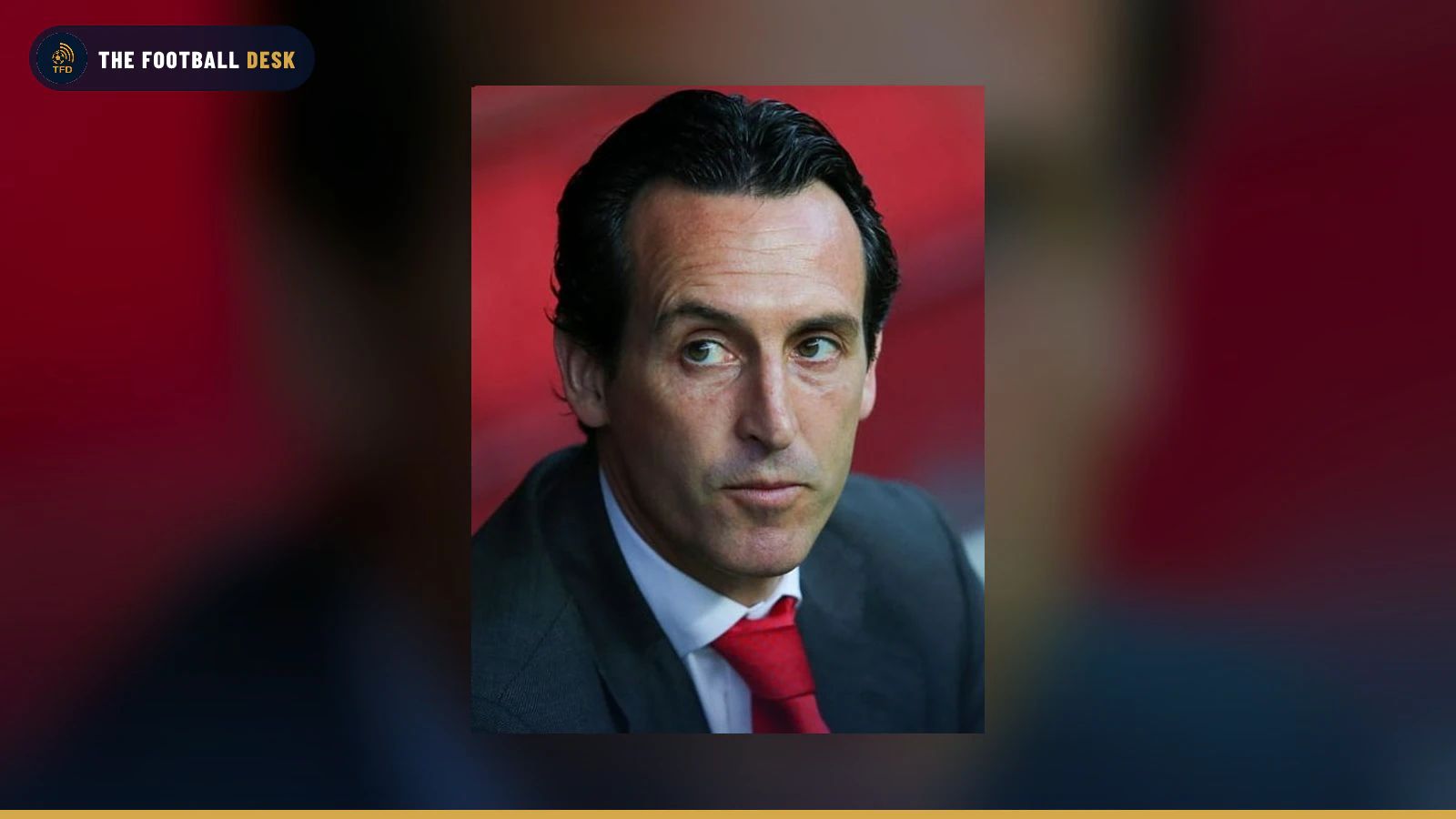
No discussion of the Europa League is complete without Unai Emery. The Spanish coach has won the competition five times: three times with Sevilla, once with Villarreal and now once with Aston Villa. UEFA notes that he is the first coach to win the tournament with three different clubs, and he is its most successful manager.
What makes Emery so good in this competition? His teams are extremely well prepared. He studies opponents in great detail and adjusts his tactics for each match. In knockout football, where one bad night can end a campaign, that preparation is a huge advantage.
The 2026 final: Freiburg 0-3 Aston Villa
The final was played at Beşiktaş Park in Istanbul on 20 May 2026. Freiburg were trying to win the first major trophy in their history. Villa were trying to win their first major trophy in 30 years.
For about 40 minutes it was tense and even. Then, just before half-time, Youri Tielemans volleyed Villa ahead from a Morgan Rogers cross that followed a short corner. In stoppage time at the end of the first half, Emiliano Buendía cut inside and curled a superb shot into the far corner to make it 2-0.
Early in the second half, Buendía went down the left and crossed for Rogers to tap in the third. Amadou Onana later headed against the post, but Villa had already done enough.
Buendía was named Player of the Match. UEFA’s technical observers praised his work “between the lines,” his passing and the way he “led the team’s attacking intensity.”
What the win meant for Villa
It is hard to overstate how important this result was for Aston Villa. It was the club’s first European trophy in 44 years, since their famous European Cup win in 1982, and their first major trophy of any kind for 30 years.
UEFA’s statistics also show that Villa were the competition’s top scorers, with 31 goals. They became the 31st different winner of the UEFA Cup/Europa League, and the sixth from England.
Villa also finished fourth in the Premier League in 2025/26, so they qualified for the Champions League twice over.
Why English clubs are doing so well
Villa’s win continued a strong run for English clubs in European finals. UEFA pointed out that English clubs have now won the last seven men’s European club finals played against German opposition.
Part of the reason is money. Premier League clubs have far greater resources than most of their European rivals, which means even mid-table English teams have strong squads. That makes them dangerous in the Europa League, where they often face clubs with much smaller budgets.
Our view
The Europa League is no longer a consolation prize. With a Champions League place as the reward and a format that keeps the big games coming, it has become a competition clubs genuinely want to win.
For Aston Villa, the 2026 final was a night that will be remembered for generations. For Emery, it was further proof that there is no better coach in knockout European football outside the Champions League. And for neutrals, it was a reminder that European football’s second competition can produce first-class stories.
Sources: UEFA final report, UEFA format guide, Premier League.