
For three seasons in a row, Arsenal were the nearly men. They chased Manchester City to the final weeks, then watched someone else lift the trophy. By the start of 2025/26, a fair question was whether Mikel Arteta’s team had a ceiling just below the summit.
They answered it. Arsenal won the 2025/26 Premier League with 85 points, ending a 22-year wait for the title. It was confirmed on 19 May 2026, when Manchester City drew 1-1 at Bournemouth and could no longer catch them, according to the Premier League.
Six months later, with the new season well under way, it is worth looking back properly at how they did it. Because this was not a fluke, and it was not won the same way City won their titles.
The final table
The top of the 2025/26 table looked like this:
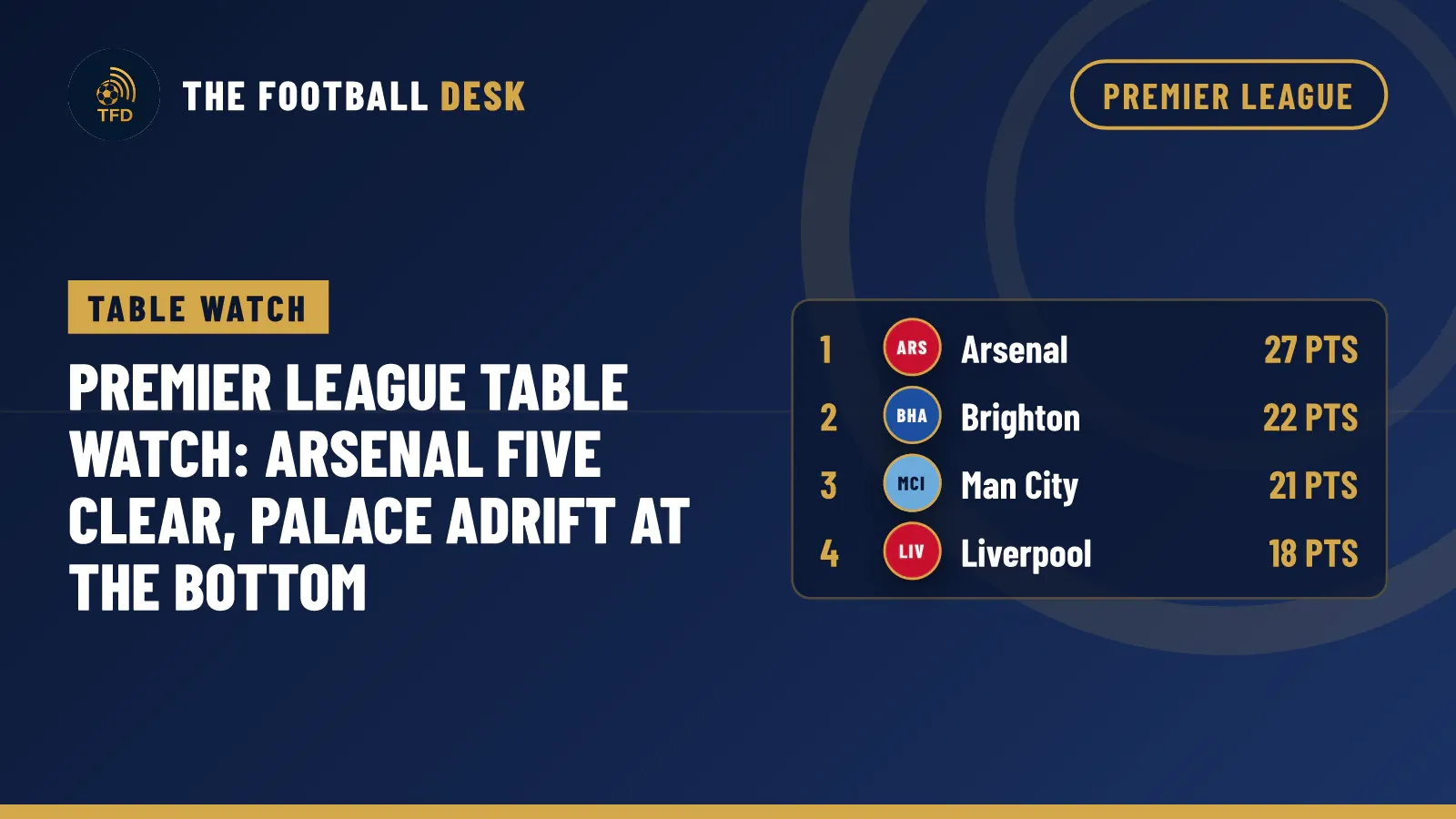
- Arsenal – 85 points (W26 D7 L5, goals 71-27)
- Manchester City – 78
- Manchester United – 71
- Aston Villa – 65
- Liverpool – 60
At the other end, West Ham, Burnley and Wolves were relegated.
Arsenal’s 71 goals is a good tally but not an exceptional one for a champion. The difference was at the other end. Twenty-seven goals conceded in 38 games is the kind of number that wins titles even in seasons when the attack misfires.
The set-piece team
The most talked-about feature of Arsenal’s season was their record from dead balls, and the numbers support the hype. The Premier League’s own analysis of the title win records that Arsenal scored 24 set-piece goals. Eighteen of those came from corners, which is a Premier League record.
Even more telling: 14 of those corner goals opened the scoring. In tight games, Arsenal did not need to break teams down through open play. They could get ahead from a corner and then manage the game from there, which suited their excellent defence.
Declan Rice’s inswinging corners led to eight goals, and Bukayo Saka’s to six, according to the same analysis. Much of the credit goes to set-piece coach Nicolas Jover, who has turned this part of the game into an Arsenal weapon over several seasons.
There is a snobbery in some quarters about set-piece goals, as if they count for less than a flowing team move. We think that view is out of date. Corners are part of football. If you can turn routine restarts into genuine chances week after week, that is a skill like any other, and Arsenal practised it more seriously than anyone else.
A defence that barely gave anything away
The Premier League’s figures also show Arsenal kept 32 clean sheets in all competitions, 19 of them in the league. They conceded 26 league goals from an expected goals against total of 27.32, according to the same analysis. In other words, Arsenal were not riding luck. They simply did not allow many good chances.
David Raya won the Golden Glove, but this was a team effort. Arsenal’s back line, built around William Saliba and Gabriel, was the best in the league, and the midfield protected it well. The league’s analysis notes that Arsenal outran 35 of their 37 opponents, which says a lot about the work rate Arteta demanded.
The midfield finally fitted
One of the key signings of the season was Martín Zubimendi, who arrived in the summer of 2025. Arsenal had searched for a long time for a controlling midfielder who could keep the ball moving and protect the defence. Zubimendi gave them that, allowing Rice to play further forward and have a bigger influence in the final third.
Arteta also showed more tactical flexibility than in earlier seasons. The Premier League’s analysis notes that he used a 4-2-3-1 in 13 of 37 games, moving away from his usual 4-3-3 when the opponent or the squad’s fitness demanded it. That flexibility helped Arsenal stay consistent through a season that included a long Champions League run and injuries to key players.
Youth as well as experience
The season also produced one of the stories of the year. Max Dowman, aged 16, became the youngest scorer in Premier League history. It was a sign that Arsenal’s academy is producing players of real quality again, and it gave the title campaign a moment that supporters will talk about for years.
The near miss in Europe
The only thing missing was the Champions League. Arsenal won all eight league phase games and reached the final in Budapest, where they took an early lead against Paris Saint-Germain through Kai Havertz. They lost on penalties after a 1-1 draw.
It would have been the first league and European Cup double in the club’s history. Instead, Arsenal will have to settle for a historic league title — their fourth in the Premier League era and the club’s 14th top-flight title in all.
Why this title is different
Arsenal’s last league title, in 2003/04, came with the Invincibles: a team of attacking stars led by Thierry Henry, who went the whole season unbeaten. This title was built on a different foundation. It was won by a team that defended brilliantly, scored when it mattered, and turned set pieces into an art.
Some will say that makes it less romantic. We would argue it makes it more impressive. Arsenal finished seven points clear of a Manchester City side that has dominated English football for most of the last decade. They did it by being better organised, better drilled and harder to beat than anyone else.
What comes next
The challenge now is the hardest one in football: doing it again. Champions get studied. Opponents will defend corners differently, and some will try to deny Arsenal the set-piece opportunities that won them so many games.
But Arteta’s team has shown it can adapt. The squad is still young at its core, and the club has proved it can identify players who fit the system. For the first time in two decades, Arsenal begin a season as the team everyone else has to catch.
Sources: Premier League title report, Premier League tactical analysis.